Bridging the Horizon: Modern Training Strategies for University Students
The transition from academic theory to professional execution represents one of the most critical phases in a young person’s development. For generations, higher education relied on a traditional blueprint: attend lectures, complete written examinations, and secure a degree. However, in an era defined by rapid technological innovation and shifting economic landscapes, traditional instruction alone is no longer enough. Modern university students require comprehensive, structured training that equips them with practical skills, emotional resilience, and adaptability.

Effective training programs inside and outside the campus environment do not replace traditional education; they amplify it. By bridging academic concepts with real-world application, structured student training prepares the next generation to step confidently into complex professional environments.
The Evolution of Student Training in Higher Education
Historically, university-level training was largely synonymous with internships or occasional vocational workshops. These experiences were often passive, leaving students to observe rather than actively execute tasks. Modern … Read more
The Inner Spark: Redefining Motivation in the Journey of Lifelong Learning
Education is often spoken of as a ladder, a set of hurdles, or a series of credentials to collect. Students and adult learners alike frequently view study hours, examinations, and assignments as external obligations imposed by societal standards or career demands. When approached purely as a chore, learning becomes exhausting, leading to burn out and cognitive fatigue. True, sustainable educational motivation does not come from external pressure or short-term rewards; it springs from an internal shift in how we perceive knowledge and human potential.

To unlock consistent passion for learning, we must dismantle traditional mindsets and cultivate a deeply personal, purpose-driven approach to education.
Shifting from a Fixed Mindset to a Growth Mindset
One of the greatest barriers to educational motivation is the silent belief that intelligence is static. When individuals hit complex mathematical concepts, difficult language syntax, or intricate scientific theories, many quickly conclude that they simply lack … Read more
The Symbiosis of Science and Education: Engineering the Next Intellectual Leap
Science and education do not exist in separate spheres; they are two sides of the same evolutionary coin. Science is the systematic process of discovering how the universe works, while education is the vehicle that preserves, translates, and passes those discoveries to successive generations. When these two forces operate in complete synergy, they do not merely impart facts—they transform how society thinks, solves problems, and adapts to an increasingly complex world.

As humanity confronts unprecedented global shifts, reimagining the relationship between scientific inquiry and educational practice is no longer just beneficial. It is essential for future progress.
Moving Beyond Static Knowledge to Empirical Literacy
For decades, traditional educational models treated science primarily as a collection of established facts to be memorized—periodic tables, physical formulas, and biological taxonomy. However, science in the real world is not a static repository of static truths. It is a dynamic, self-correcting process driven by curiosity, … Read more
The Catalyst of Progress: How Education Shapes the Destiny of Nations
Education is far more than a personal milestone or a stepping stone toward individual career success. When viewed through a macro lens, it functions as the central engine driving national growth, resilience, and sovereignty. The structural strength of any modern country is directly proportional to the cognitive and technical capacity of its populace. Nations that prioritize systemic, high-quality education systematically outpace those that view learning merely as a secondary social expenditure.
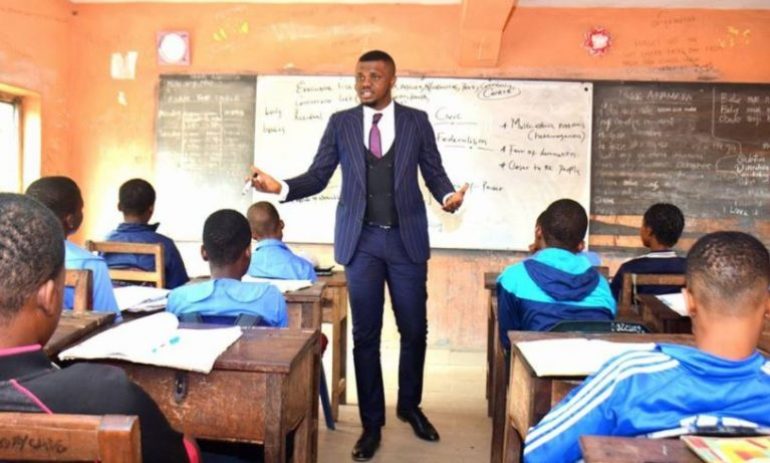
Understanding the deep relationship between national progress and public education reveals why knowledge remains the ultimate strategic resource in the global economy.
Driving Sustainable Economic Prosperity
At the core of every strong economy lies human capital. Natural resources like oil, minerals, or agricultural land can generate wealth, but they are finite and subject to volatile global commodity markets. Education transforms a nation’s workforce into an infinite renewable resource capable of generating sustainable long-term value.
An educated population attracts high-value … Read more
Why Early Childhood Education is the Cornerstone of Future Success
The journey of human development is a lifelong process, yet no period is as critical or as transformative as the first eight years of life. This window, commonly categorized as Early Childhood Education (ECE), represents a phase where the brain is at its most plastic, absorbing information like a sponge and forming the neural pathways that will dictate future learning, behavior, and health. Understanding the depth and impact of childhood education is no longer just a concern for parents; it is a vital pillar for a thriving society.

The Science of the Developing Brain
To appreciate the importance of early education, we must first look at the biology. Research in neuroscience has consistently shown that during the early years, the brain creates more than one million new neural connections every second. These connections are the building blocks of cognitive function.
When a child is exposed to a rich, stimulating educational … Read more