The debate surrounding “Education vs. Science” often arises from a fundamental misunderstanding of how human knowledge is built and shared. At a glance, one might see them as two distinct pillars: science as the pursuit of new truths about the universe, and education as the mechanism used to pass those truths down to the next generation. However, the relationship between these two fields is far more nuanced. They are not opposing forces, but rather two sides of the same coin, each dependent on the other for survival and progress.
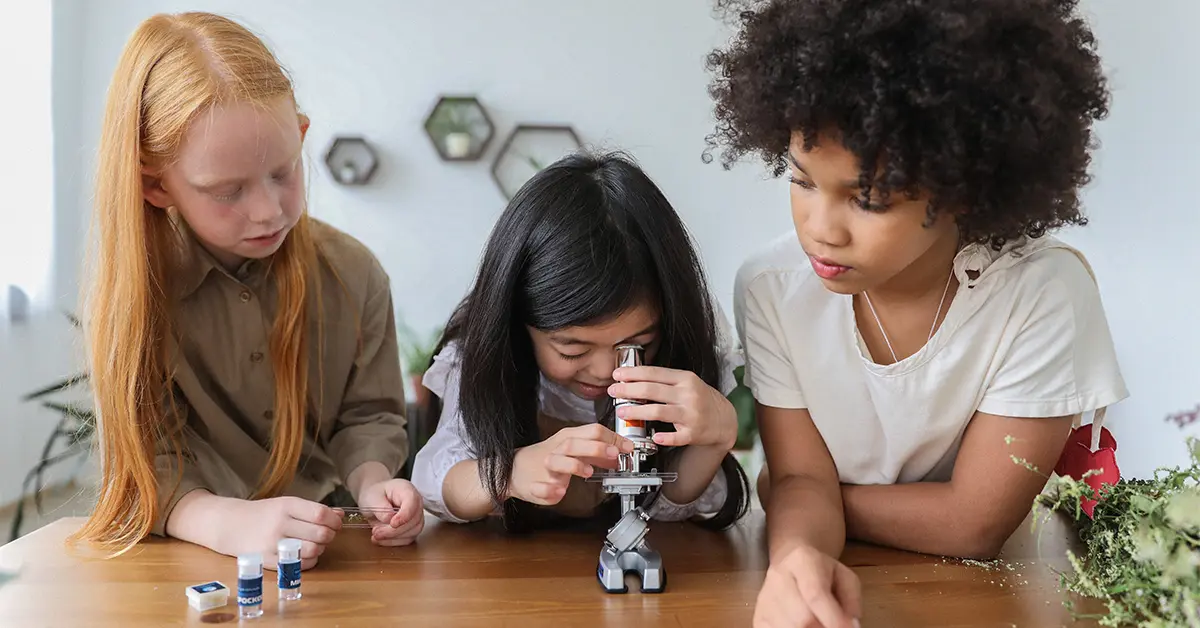
To explore this relationship, we must dive into how science provides the “what” of our knowledge, while education provides the “how” of our intellectual growth.
Defining the Boundaries: Knowledge Creation vs. Knowledge Transfer
To understand the tension and the harmony between these two fields, we must first define their core objectives.
Science is a systematic enterprise that builds and organizes knowledge in the form of testable explanations and predictions about the universe. It is rooted in the scientific method—observation, experimentation, and evidence. The goal of science is discovery. It pushes the boundaries of the unknown, challenging existing paradigms and seeking to understand the mechanics of everything from subatomic particles to distant galaxies.
Education, on the other hand, is the process of facilitating learning. It is the structured method by which a society transmits its accumulated knowledge, skills, and values from one generation to the next. While science focuses on the discovery of facts, education focuses on the development of the individual. Education ensures that the progress made by scientists does not die with them but becomes a stepping stone for the future.
Science as the Content of Education
Without science, modern education would be hollow. Most of what we teach in schools—biology, physics, chemistry, and even social sciences—is the direct result of scientific inquiry. Science provides the rigorous content that populates our textbooks.
However, education does more than just repeat scientific facts. It contextualizes them. A scientist might discover a new method for gene editing (CRISPR), but it is the role of education to teach the ethics, history, and social implications of that discovery. Education takes the raw, often cold data of science and weaves it into a narrative that humans can understand and use to improve their lives.
Education as the Engine of Scientific Progress
While science feeds education with content, education is the primary engine that drives science forward. No scientist is born with an innate understanding of calculus or molecular biology. Every great innovator, from Marie Curie to Albert Einstein, was first a student.
Education provides the foundational tools—literacy, numeracy, and critical thinking—that allow an individual to become a scientist. Furthermore, the field of “Science Education” is a specialized branch of pedagogy that studies how to effectively teach complex scientific concepts. Without a robust educational system, the pipeline of new researchers, engineers, and doctors would dry up. In this sense, education is the “research and development” department for the future of science.
The Conflict: Method vs. Curriculum
The “Education vs. Science” debate often heats up when we look at the speed of progress. Science is incredibly fast-paced. New discoveries are made every day, and old theories are constantly being debunked.
Education, particularly in formal institutional settings like public schools, is notoriously slow to change. It can take years, sometimes decades, for a new scientific consensus to make its way into a standard K-12 textbook. This creates a gap where students are sometimes taught “outdated” science because the educational infrastructure cannot keep up with the laboratory.
Another point of friction is the “Scientific Method” vs. “Educational Standardized Testing.” Science encourages failure as a way to learn; an experiment that fails is still a data point. Traditional education, however, often punishes failure through grading systems. This can stifle the very curiosity and risk-taking that are essential for scientific breakthroughs.
The Symbiosis: STEM and Beyond
In recent years, the movement toward STEM (Science, Technology, Engineering, and Mathematics) education has attempted to bridge the gap. By integrating these fields, educators are trying to make the learning process more “scientific.” Instead of just memorizing facts, students are encouraged to engage in inquiry-based learning—essentially acting like mini-scientists in the classroom.
This symbiotic approach recognizes that:
- Science needs Education to produce a scientifically literate public that can support and fund research.
- Education needs Science to provide a factual basis for understanding the world and to solve the practical problems of teaching (such as using neuroscience to understand how students learn).
Conclusion: A Collaborative Future
The comparison of Education vs. Science is not a battle for dominance, but a study in interdependence. Science is the quest for truth, and education is the quest for human growth. One discovers the fire, and the other teaches us how to keep it burning and use it to light the way for others.
As we move further into the 21st century, the boundaries between these two will continue to blur. We need science to help us understand the brain and improve our teaching methods, and we need education to inspire the next generation to look at the stars and ask “why?” Only by valuing both can we ensure a society that is both knowledgeable about the world and capable of changing it for the better.