Education is far more than a personal milestone or a stepping stone toward individual career success. When viewed through a macro lens, it functions as the central engine driving national growth, resilience, and sovereignty. The structural strength of any modern country is directly proportional to the cognitive and technical capacity of its populace. Nations that prioritize systemic, high-quality education systematically outpace those that view learning merely as a secondary social expenditure.
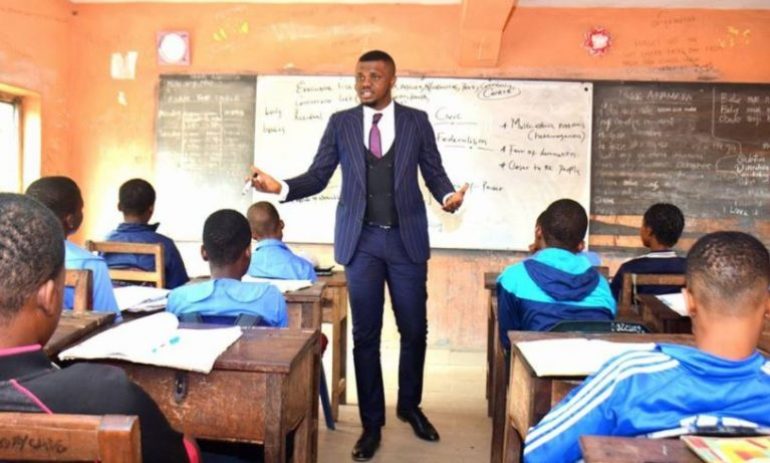
Understanding the deep relationship between national progress and public education reveals why knowledge remains the ultimate strategic resource in the global economy.
Driving Sustainable Economic Prosperity
At the core of every strong economy lies human capital. Natural resources like oil, minerals, or agricultural land can generate wealth, but they are finite and subject to volatile global commodity markets. Education transforms a nation’s workforce into an infinite renewable resource capable of generating sustainable long-term value.
An educated population attracts high-value foreign direct investment and fosters local entrepreneurship. Modern industries—ranging from artificial intelligence and advanced manufacturing to renewable energy and biotechnology—require sophisticated skill sets. When a country invests in comprehensive STEM and technical education, it creates an environment where high-tech industries thrive. Furthermore, higher education levels correlate directly with increased labor productivity, higher average wages, and a stronger tax base that can fund vital public infrastructure.
Fostering Technological Sovereignty and Innovation
In the modern world order, national security and economic independence are deeply tied to technological independence. Nations that rely entirely on foreign technology remain vulnerable to supply chain disruptions, geopolitical pressure, and economic exploitation.
Education fuels domestic research and development. By building robust universities, research centers, and vocational institutes, a nation cultivates homegrown scientists, engineers, and innovators. These specialists create tailored solutions for regional challenges, whether developing drought-resistant crops, designing modern civil infrastructure, or securing national digital networks against global cyber threats. Self-reliance in technology and research is impossible without a well-funded, accessible educational ecosystem.
Strengthening Democratic Foundations and Civic Stability
A nation’s political stability depends significantly on the critical thinking capabilities of its citizens. Education provides individuals with the analytical tools necessary to evaluate information, understand public policy, and actively participate in civic life.
In an era dominated by rapid information flows and digital misinformation, an educated populace is better equipped to distinguish factual reporting from deliberate manipulation. Literate and critically minded citizens are more likely to demand accountability from political leadership, engage in constructive public discourse, and respect legal institutions. Consequently, nations with higher literacy and education rates tend to experience greater political stability, lower rates of social unrest, and more resilient democratic structures.
Reducing Social Inequality and Poverty
Systemic poverty and extreme wealth inequality pose severe threats to national harmony. Unchecked disparity often breeds crime, civil tension, and social fragmentation. Education serves as the most effective equalizing force available to policymakers attempting to bridge these socio-economic divides.
Providing equal access to quality schooling allows children from socio-economically disadvantaged backgrounds to break generational cycles of poverty. When public education operates efficiently, social mobility increases, ensuring that talent—rather than inherited privilege—determines individual success. A nation that taps into the potential of its entire population, regardless of gender, socio-economic status, or geographic location, unlocks massive economic capacity that would otherwise remain dormant.
Elevating Public Health and Community Resilience
The benefits of national education extend far beyond economic metrics and political structures; they directly influence public health and population demographics. Health literacy is closely tied to basic education.
An educated public is better equipped to understand preventative healthcare practices, nutritional needs, and disease transmission dynamics. During health crises, educated populations adapt more rapidly to public safety protocols, reducing the burden on national healthcare infrastructure. Furthermore, educated parents, particularly educated mothers, tend to have healthier children, lower infant mortality rates, and greater awareness of family planning, contributing directly to a healthier and more resilient future workforce.
Preserving Culture in a Globalized Era
Global integration offers immense economic opportunities, but it also presents the risk of cultural homogenization. Education plays a vital role in preserving and evolving a nation’s unique cultural identity, history, and values amid rapid globalization.
Through national curricula, literature, history, and language studies, educational institutions pass foundational cultural knowledge down to future generations. Rather than isolating a country from the outside world, a strong educational foundation enables a nation to engage confidently with the international community while maintaining a clear sense of identity, pride, and historic continuity.
Building the Future Nation
Education is not merely a government service; it is the fundamental infrastructure upon which all other national achievements are built. From driving economic growth and technological innovation to promoting political stability and social equity, the investment a country makes in its learners determines its trajectory on the world stage.
Nations that treat education as an urgent strategic priority build populations capable of navigating global uncertainty, driving progress, and securing sustainable prosperity for generations to come. Knowledge remains the single most powerful investment a sovereign state can make.